


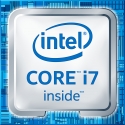
The product's shade and actual color may differ from what is shown in the picture, as the images are for illustrative purposes. The product description is general and may not include all the product's features.
Intel Core i7-9700 processor 3 GHz 12 MB Smart Cache Tray
349,87 €
Monthly payment from 9.91 €
693701 CM8068403874521
0675901759618, 5054444233482, 5704174521556, 8592978158811
Shipping 1-2 b.d.
 Pay 5x69.97€
You are interested in this product?
Intel® Optane™ memory is a revolutionary new class of non-volatile memory that sits in between system memory and storage to accelerate system performance and responsiveness. When combined with the Intel® Rapid Storage Technology Driver, it seamlessly manages multiple tiers of storage while presenting one virtual drive to the OS, ensuring that data frequently used resides on the fastest tier of storage. Intel® Optane™ memory requires specific hardware and software configuration.
Intel® Turbo Boost Technology
Intel® Turbo Boost Technology dynamically increases the processor's frequency as needed by taking advantage of thermal and power headroom to give you a burst of speed when you need it, and increased energy efficiency when you don’t.
Intel® vPro™ Platform Eligibility
Intel® vPro™ Technology is a set of security and manageability capabilities built into the processor aimed at addressing four critical areas of IT security: 1) Threat management, including protection from rootkits, viruses, and malware 2) Identity and web site access point protection 3) Confidential personal and business data protection 4) Remote and local monitoring, remediation, and repair of PCs and workstations.
Intel® Virtualization Technology (VT-x)
Intel® Virtualization Technology (VT-x) allows one hardware platform to function as multiple “virtual” platforms. It offers improved manageability by limiting downtime and maintaining productivity by isolating computing activities into separate partitions.
Intel® Virtualization Technology for Directed I/O (VT-d)
Intel® Virtualization Technology for Directed I/O (VT-d) continues from the existing support for IA-32 (VT-x) and Itanium® processor (VT-i) virtualization adding new support for I/O-device virtualization. Intel VT-d can help end users improve security and reliability of the systems and also improve performance of I/O devices in virtualized environments.
Intel® VT-x with Extended Page Tables (EPT)
Intel® VT-x with Extended Page Tables (EPT), also known as Second Level Address Translation (SLAT), provides acceleration for memory intensive virtualized applications. Extended Page Tables in Intel® Virtualization Technology platforms reduces the memory and power overhead costs and increases battery life through hardware optimization of page table management.
Intel® TSX-NI
Intel® Transactional Synchronization Extensions New Instructions (Intel® TSX-NI) are a set of instructions focused on multi-threaded performance scaling. This technology helps make parallel operations more efficient via improved control of locks in software.
Intel® 64
Intel® 64 architecture delivers 64-bit computing on server, workstation, desktop and mobile platforms when combined with supporting software.¹ Intel 64 architecture improves performance by allowing systems to address more than 4 GB of both virtual and physical memory.
Instruction Set
An instruction set refers to the basic set of commands and instructions that a microprocessor understands and can carry out. The value shown represents which Intel’s instruction set this processor is compatible with.
Instruction Set Extensions
Instruction Set Extensions are additional instructions which can increase performance when the same operations are performed on multiple data objects. These can include SSE (Streaming SIMD Extensions) and AVX (Advanced Vector Extensions).
Idle States
Idle States (C-states) are used to save power when the processor is idle. C0 is the operational state, meaning that the CPU is doing useful work. C1 is the first idle state, C2 the second, and so on, where more power saving actions are taken for numerically higher C-states.
Enhanced Intel SpeedStep® Technology
Enhanced Intel SpeedStep® Technology is an advanced means of enabling high performance while meeting the power-conservation needs of mobile systems. Conventional Intel SpeedStep® Technology switches both voltage and frequency in tandem between high and low levels in response to processor load. Enhanced Intel SpeedStep® Technology builds upon that architecture using design strategies such as Separation between Voltage and Frequency Changes, and Clock Partitioning and Recovery.
Thermal Monitoring Technologies
Thermal Monitoring Technologies protect the processor package and the system from thermal failure through several thermal management features. An on-die Digital Thermal Sensor (DTS) detects the core's temperature, and the thermal management features reduce package power consumption and thereby temperature when required in order to remain within normal operating limits.
Intel® Identity Protection Technology
Intel® Identity Protection Technology is a built-in security token technology that helps provide a simple, tamper-resistant method for protecting access to your online customer and business data from threats and fraud. Intel® IPT provides a hardware-based proof of a unique user’s PC to websites, financial institutions, and network services; providing verification that it is not malware attempting to login. Intel® IPT can be a key component in two-factor authentication solutions to protect your information at websites and business log-ins.
Intel® Stable Image Platform Program (SIPP)
Intel® Stable Image Platform Program (Intel® SIPP) can help your company identify and deploy standardized, stable image PC platforms for at least 15 months.
Processor | |
| Processor model | i7-9700 |
| Processor socket | LGA 1151 (Socket H4) |
| Processor family | Intel® Core™ i7 |
| Processor lithography | 14 nm |
| Processor cores | 8 |
| System bus rate | 8 GT/s |
| Processor threads | 8 |
| Processor operating modes | 64-bit |
| Processor boost frequency | 4.7 GHz |
| Component for | PC |
| Processor codename | Coffee Lake |
| Processor cache type | Smart Cache |
| Memory bandwidth supported by processor (max) | 41.6 GB/s |
| Processor cache | 12 MB |
| Thermal Design Power (TDP) | 65 W |
| Processor ARK ID | 191792 |
| Cooler included | No |
| Generation | 9th Generation |
| Processor manufacturer | Intel |
| Processor base frequency | 3 GHz |
| Package type | Tray |
| Processor generation | 9th gen Intel® Core™ i7 |
Memory | |
| Maximum internal memory supported by processor | 128 GB |
| Memory types supported by processor | DDR4-SDRAM |
| Memory clock speeds supported by processor | 2666 MHz |
| Memory channels | Dual-channel |
| ECC | No |
Features | |
| Execute Disable Bit | Yes |
| Idle States | Yes |
| Thermal Monitoring Technologies | Yes |
| PCI Express slots version | 3.0 |
| Scalability | 1S |
| CPU configuration (max) | 1 |
| Embedded options available | No |
| PCI Express configurations | 1x16, 2x8, 1x8+2x4 |
| Supported instruction sets | SSE4.1, SSE4.2, AVX 2.0 |
| Thermal solution specification | PCG 2015C |
| Maximum number of PCI Express lanes | 16 |
| Market segment | Desktop |
| Export Control Classification Number (ECCN) | 5A992C |
| Commodity Classification Automated Tracking System (CCATS) | G077159 |
| PCI Express CEM revision | 3.0 |
Graphics | |
| On-board graphics card | Yes |
| On-board graphics card model | Intel® UHD Graphics 630 |
| On-board graphics card base frequency | 350 MHz |
| On-board graphics card dynamic frequency (max) | 1200 MHz |
| On-board graphics card maximum resolution (DisplayPort) | 4096 x 2304 pixels |
| On-board graphics card ID | 0x3E98 |
| On-board graphics card maximum resolution (eDP - Integrated Flat Panel) | 4096 x 2304 pixels |
| On-board graphics card refresh rate at maximum resolution (DisplayPort) | 60 Hz |
| On-board graphics card refresh rate at maximum resolution (eDP - Integrated Flat Panel) | 60 Hz |
| On-board graphics card refresh rate at maximum resolution (HDMI) | 24 Hz |
| On-board graphics card 4K support | Yes |
| Maximum on-board graphics card memory | 64 GB |
| Number of displays supported (on-board graphics) | 3 |
| On-board graphics card maximum resolution (HDMI) | 4096 x 2304 pixels |
| On-board graphics card DirectX version | 12.0 |
| On-board graphics card OpenGL version | 4.5 |
| Discrete graphics card | No |
| Discrete graphics card model | Not available |
Processor special features | |
| Intel® Hyper Threading Technology (Intel® HT Technology) | No |
| Intel® Identity Protection Technology (Intel® IPT) | Yes |
| Intel® Turbo Boost Technology | 2.0 |
| Intel® Quick Sync Video Technology | Yes |
| Intel® InTru™ 3D Technology | Yes |
| Intel® Clear Video HD Technology (Intel® CVT HD) | Yes |
| Intel® AES New Instructions (Intel® AES-NI) | Yes |
| Enhanced Intel SpeedStep Technology | Yes |
| Intel Trusted Execution Technology | Yes |
| Intel VT-x with Extended Page Tables (EPT) | Yes |
| Intel® Secure Key | Yes |
| Intel TSX-NI | Yes |
| Intel Stable Image Platform Program (SIPP) | Yes |
| Intel® OS Guard | Yes |
| Intel Clear Video Technology | Yes |
| Intel Software Guard Extensions (Intel SGX) | Yes |
| Intel 64 | Yes |
| Intel Virtualization Technology (VT-x) | Yes |
| Intel Virtualization Technology for Directed I/O (VT-d) | Yes |
| Intel® Memory Protection Extensions (Intel® MPX) | Yes |
| Intel® Optane™ Memory Ready | Yes |
| Intel® Boot Guard | Yes |
| Intel® vPro™ Platform Eligibility | Yes |
| Intel® Transactional Synchronization Extensions | Yes |
| Intel® Turbo Boost Technology 2.0 frequency | 4.7 GHz |
Operational conditions | |
| Tjunction | 100 °C |
Weight & dimensions | |
| Processor package size | 37.5 x 37.5 mm |
Other features | |
| Maximum internal memory | 128 GB |
Technical details | |
| Launch date | Q2'19 |
| Maximum resolution & refresh rate (DisplayPort) | 4096 x 2304@60Hz |
| Product type | Processor |
| Status | Launched |
| Maximum memory | 128 GB |
| Supported memory types | DDR4-SDRAM |
| Bus speed | 8 GT/s |
| Maximum graphics card memory | 64 GB |
| Processor ID | 0x3E98 |
Logistics data | |
| Harmonized System (HS) code | 8542310001 |
30 other products in the same category:






© 2026 Frogest OÜ. All right reserved.


